In Tulsa, subsurface investigation must address the region’s variable geology—from Arkansas River alluvium to expansive shale and limestone bedrock—which directly influences foundation performance. Our geotechnical investigation category covers drilling, sampling, and in-situ testing programs designed per ASTM standards and local Tulsa County regulations. A core component is the Cone Penetration Test, which delivers continuous soil stratigraphy and pore pressure data essential for evaluating soft clays and liquefaction potential in floodplain areas.
These investigations support commercial buildings, public infrastructure, and residential developments where bearing capacity and settlement must be confirmed before design. We pair CPT data with laboratory strength testing and standard penetration testing to build a complete ground model. For projects with deep foundation needs or karst concerns in eastern Tulsa, integrating CPT analysis with rotary drilling refines pile design and mitigates risk early.
Active anchors eliminate wall movement before it begins; passive anchors control deformation once the soil engages. Choosing correctly depends on whether the structure behind the wall can tolerate any displacement at all.
Methodology and scope
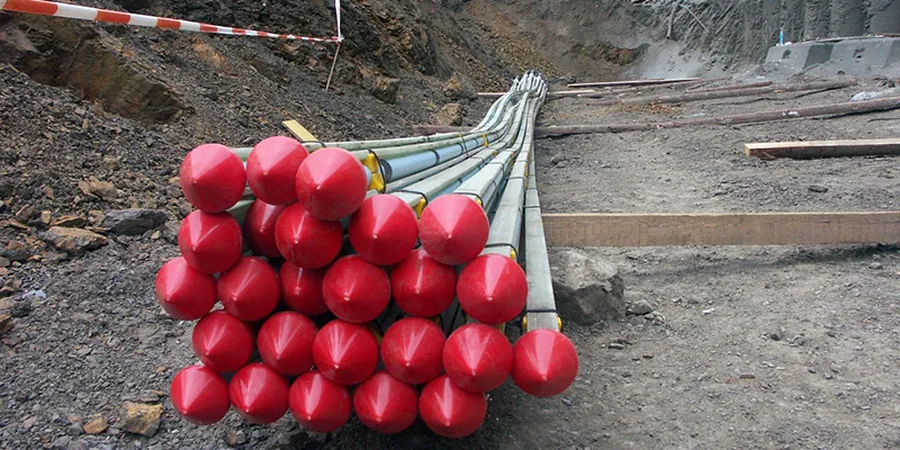
Local considerations
IBC Chapter 18 and ASCE 7-22 Section 12.13 require that retaining structures and their anchorage be designed for seismic earth pressure increments that Tulsa's moderate seismicity—influenced by the Nemaha Ridge fault system—can realistically generate. The primary failure mode we guard against is progressive anchor creep in the stiff, overconsolidated clays common across Tulsa County. When these clays are loaded near their undrained shear strength, time-dependent deformation can relax the lock-off force and transfer load back into the facing, causing cracking or tilt. A secondary concern involves grout loss into open fissures within the shale bedrock, which reduces bond capacity in an unpredictable pattern. We address this through staged grouting and by specifying pre-production verification anchors whose behavior informs the final bond length for the production phase—an approach that integrates well with slope stability analysis when the retained ground extends above the wall crest.
Applicable standards
PTI DC35.1-14 (Recommendations for Prestressed Rock and Soil Anchors), FHWA-NHI-10-016 (Drilled Shafts: Construction Procedures and LRFD Design Methods) – ground anchor provisions, ASTM A416/A416M-18 (Standard Specification for Low-Relaxation, Seven-Wire Steel Strand for Prestressed Concrete), IBC 2021 Chapter 18 (Soils and Foundations) – retaining wall anchorage requirements, ASCE 7-22 Section 12.13 (Seismic Design Requirements for Retaining Structures)
Associated technical services
Geotechnical Anchor Investigation
Review of SPT N-values, Atterberg limits, and unconfined compression data to estimate grout-to-ground bond strength. When existing borings are insufficient, supplemental test pit excavation or targeted drilling refines the stratigraphy at each anchor row elevation.
Anchor Design and Load Testing Protocol
Calculation of unbonded and bonded lengths, tendon cross-section, and lock-off load. Development of a site-specific testing specification covering performance tests, proof tests, and creep criteria consistent with PTI DC35.1.
Construction Support and Lift-Off Verification
On-site review of installation records—drilling method, grout take, and pre-grouting where required—followed by lift-off testing on a statistically selected sample of production anchors to confirm residual load remains within the design tolerance band.
Typical parameters
Frequently asked questions
What distinguishes an active anchor from a passive anchor, and when does Tulsa soil favor one over the other?
An active anchor is pre-stressed during installation to apply a known force that compresses the retained soil before any wall movement occurs; it is the preferred choice when the structure behind the wall—such as an existing building on shallow footings in Tulsa's expansive clay—cannot tolerate even minor lateral displacement. A passive anchor is not stressed initially; it develops resistance only as the wall deflects and mobilizes soil reaction, making it suitable for temporary shoring or soldier-pile walls where some movement is acceptable. The decision often turns on the plasticity index of the retained clay: high-PI soils common in eastern Tulsa County relax stress over time, so active anchors specified with a slightly elevated lock-off load and verified by lift-off testing help maintain long-term force equilibrium.
What does anchor design and testing cost for a typical Tulsa retaining wall project?
For a project requiring geotechnical evaluation, anchor design with load-testing specifications, and on-site verification of production anchors, the engineering scope typically falls between US$990 and US$3,590 depending on the number of anchor rows, the complexity of the stratigraphy, and whether corrosion protection must meet permanent-installation standards. This range covers the design deliverable and testing protocol; it does not include the contractor's installation cost, which is bid separately based on the tendon schedule we produce.
How are anchor bond lengths verified when bedrock is irregular across the Tulsa site?
We rely on pre-production sacrificial anchors installed at the most critical sections identified from the boring logs. Each pre-production anchor is incrementally loaded to failure or to 133% of the design load while monitoring creep, which provides a direct measurement of the apparent bond stress in the specific rock or soil zone. If the measured bond stress falls below the design assumption, the bonded length is extended proportionally before production drilling begins. In areas where the shale surface dips steeply—such as along the Arkansas River bluffs—this verification sequence is specified for every discrete anchor row, not just a single representative location.