Tulsa sits on a complex stratigraphy of Pennsylvanian-age shale and sandstone, with the Arkansas River cutting through alluvial deposits that range from dense gravels to soft silty clays. The city falls within a moderate seismic hazard zone influenced by the Nemaha Ridge and the Meers Fault in southern Oklahoma, making base isolation a prudent strategy for essential facilities that must remain operational after an earthquake. Our laboratory testing program feeds directly into the isolation system design parameters, linking site-specific MASW shear wave velocity profiles with the nonlinear properties of the subgrade. When the upper soil column exhibits low Vs30 values—something we encounter in river-adjacent parcels near the 71st Street Bridge—the isolation period must be tuned carefully to avoid resonance, and that calibration starts with accurate geotechnical input. We work with design teams across Tulsa County to ensure that the isolator properties match the actual ground motion expected at the site, not just the generic ASCE 7 spectra. The combination of local borehole data and advanced laboratory dynamic testing gives structural engineers the confidence to specify lead-rubber or friction pendulum bearings with realistic displacement capacities, a critical factor for facilities like hospitals and emergency response centers in the Tulsa metropolitan area.
Base isolation in Tulsa shifts from a prescriptive code exercise to a performance-based design when the site-specific soil dynamics reveal amplification peaks that generic spectra miss entirely.
Methodology and scope
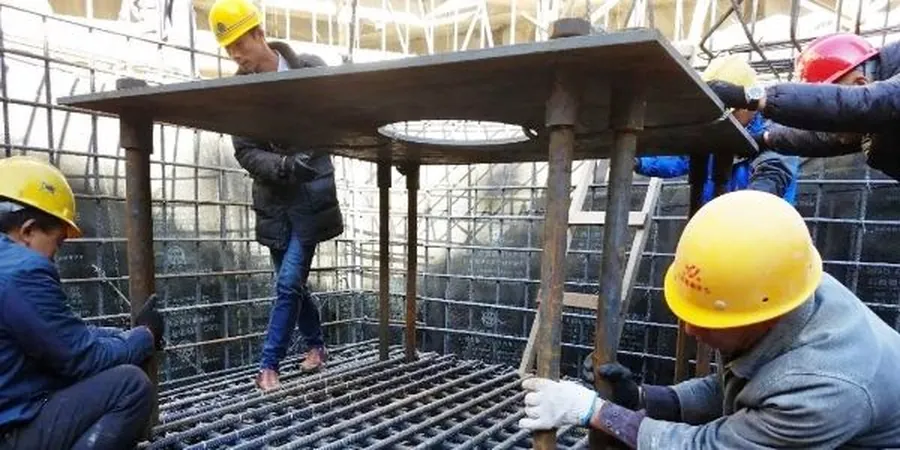
Local considerations
Tulsa's development history as an oil boom town means that undocumented fill, abandoned well casings, and variable compaction are common beneath many older commercial parcels, particularly in the downtown core and the Brady Arts District. These subsurface anomalies create differential stiffness beneath the isolation plane, which can lead to torsional response and uneven isolator displacement during a seismic event. The 2011 M5.6 Prague earthquake, though centered southwest of Tulsa, served as a reminder that intraplate seismicity in Oklahoma can produce damaging ground motion at unexpected locations. If a base-isolated structure sits on ground that has not been thoroughly investigated—including a CPT test campaign to map the lateral continuity of bearing strata—the isolators may not perform as modeled, concentrating force in a few units and potentially exceeding their displacement limits. We emphasize the integration of geophysical methods with direct sampling to identify buried obstructions, loose zones, and groundwater conditions that could compromise the foundation system below the isolation interface. A rigorous investigation reduces the uncertainty in the upper bound displacement and allows the design team to optimize the isolator properties rather than over-conservatively inflating the moat dimensions.
Applicable standards
ASCE 7-22 Minimum Design Loads and Associated Criteria for Buildings and Other Structures, IBC 2024 International Building Code with Oklahoma-specific amendments, ASTM D3999 / D4015 for cyclic triaxial and resonant column dynamic soil testing, ASCE/SEI 41-23 Seismic Evaluation and Retrofit of Existing Buildings (isolation retrofit provisions), AASHTO Guide Specifications for Seismic Isolation Design (applicable to bridge projects)
Associated technical services
Site-Specific Ground Motion and Response Analysis
We develop site-specific response spectra for Tulsa locations using DEEPSOIL or SHAKE analysis calibrated with measured Vs profiles and dynamic soil properties. This replaces the generic ASCE 7 spectrum with a demand curve that reflects local amplification, allowing the isolation system to be tuned precisely to the expected ground motion rather than an envelope that may be overly conservative or miss resonant peaks.
Isolator Foundation Design and Soil-Structure Interaction
The foundation elements below the isolation interface—typically reinforced concrete pedestals or mat slabs—must resist the concentrated loads from isolators and accommodate large lateral displacements. We provide bearing capacity and settlement analysis under seismic loading combinations, evaluating the soil-foundation-isolator interaction to ensure that rotation and uplift limits are met under MCE conditions.
Moat Wall and Utility Interface Detailing
The perimeter moat that permits isolation movement requires careful coordination between geotechnical and structural disciplines. We analyze retained soil pressures on moat walls, assess drainage requirements to prevent hydrostatic buildup, and specify flexible utility connections that accommodate the design displacement without compromising water, gas, or electrical service continuity after an event.
Typical parameters
Frequently asked questions
What is the typical cost range for base isolation design services on a Tulsa commercial project?
For a mid-rise commercial or institutional facility in Tulsa, the geotechnical and dynamic testing portion supporting base isolation design typically falls between US$3,760 and US$9,320, depending on the number of borings, the extent of laboratory cyclic testing required, and whether site response analysis is performed. This range covers the geotechnical scope only and does not include the isolator hardware, structural design fees, or construction costs.
Does Tulsa's seismic hazard really justify base isolation compared to conventional design?
Tulsa's hazard is moderate but not negligible—the combination of intraplate seismicity from the Nemaha Ridge and amplification in soft alluvial soils can produce ground motions that challenge conventional fixed-base designs. For essential facilities like hospitals, emergency operations centers, and data centers where post-earthquake functionality is required, base isolation provides a reliable path to meeting the ASCE 7 risk category IV performance objectives without the extensive structural damage that a fixed-base building might sustain.
How does the Arkansas River alluvium affect isolator selection?
The alluvial deposits along the Arkansas River corridor in Tulsa tend to amplify long-period ground motion, which can push the effective isolation period into a range where displacements become large. We address this by recommending isolators with higher damping characteristics—such as high-damping rubber bearings with 15-20 percent equivalent viscous damping—and by modeling the soil profile explicitly in site response analysis to capture the spectral shape at periods of 1 to 3 seconds where isolation systems operate.
What laboratory tests are required to support the isolation design parameters?
The minimum testing suite includes resonant column and cyclic triaxial tests to define shear modulus degradation and damping ratio as a function of strain for each soil unit within the profile. We also perform consolidation and triaxial shear strength tests on the bearing stratum below the isolator foundations to confirm capacity under seismic load combinations. When the site is underlain by potentially liquefiable sands—a condition we check using SPT-based procedures per Youd and Idriss—additional testing may be required to assess the residual strength and settlement potential affecting the isolation plane.