The contrast between a Midtown Tulsa lot perched on a gentle ridge and a riverfront property along the Arkansas River's winding path couldn't be more striking when it comes to subsurface behavior. Up in the rolling Osage-influenced hills near Woodward Park, you might find stiff, overconsolidated shale that stands nearly vertical in cuts, while down in the floodplain near the Gathering Place, the alluvial deposits can slump without warning after a heavy spring rain. We've run slope stability analysis across Tulsa's patchwork of neighborhoods, from Brookside's commercial expansions to residential builds in Bixby and Jenks, and the local stratigraphy demands more than a generic factor-of-safety calculation. Our approach ties into geotechnical drilling and SPT data to define the shear strength profile, and when we encounter sandstone beds within the shale sequence, the triaxial shear tests become essential for capturing the effective stress parameters that govern long-term stability.
In Tulsa's Pennsylvanian shale, the difference between a stable slope and a creeping failure often comes down to a 2-inch slickensided seam that conventional borings miss.
Methodology and scope
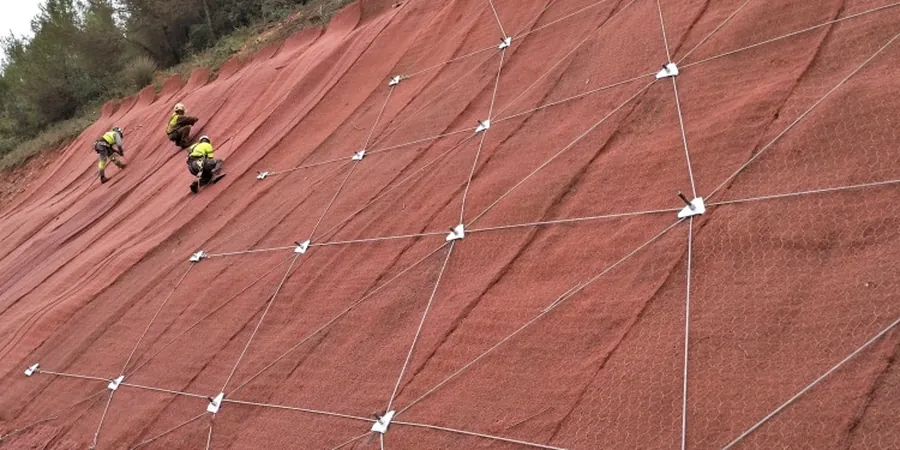
Local considerations
What we keep seeing in Tulsa, particularly in developments carved into the hillsides west of the Arkansas River or along the Creek Turnpike corridor, is that contractors and even some engineers underestimate the time-dependent strength loss in the shale. You can excavate a perfectly stable cut in August when the claystone is dry and hard, only to return in February after a freeze-thaw cycle and find tension cracks running parallel to the crest. Those cracks fill with water, the shale softens at the toe, and suddenly you have a progressive failure that threatens foundation elements only 15 feet back from the edge. The cost isn't just in the repair; it's in the project delay, the additional retaining structures, and the liability if the slide mass intersects a neighboring property. We've performed forensic analysis on several Tulsa landslides where the original investigation simply didn't account for the perched groundwater that accumulates on the sandstone bench, and the resulting effective stress reduction turned a 1.5 factor of safety into something closer to 1.0 within a single wet season.
Explanatory video
Applicable standards
FHWA-NHI-05-123 (Soil Slope and Embankment Design), IBC 2021 Chapter 18 (Soils and Foundations), ASCE 7-22 (Seismic Provisions, Pseudo-Static Analysis), ASTM D3080 (Direct Shear Test), ASTM D4767 (Consolidated Undrained Triaxial), AASHTO LRFD Bridge Design Specifications (Section 11)
Associated technical services
Residential & Hillside Lot Stability Evaluations
When a custom home builder in a Tulsa neighborhood like Forest Hills or Sunset Terrace needs to confirm that a steep backyard can support a pool and a patio without creeping toward the house, we conduct detailed limit equilibrium analyses using Spencer's method. We correlate our lab-derived strength parameters with the specific shale member encountered, often the Labette or Seminole formation, and provide setback recommendations or design parameters for a soldier pile wall if space is constrained.
Commercial & Infrastructure Slope Design
For larger-scale work such as the retail expansions along Highway 169 or the institutional campuses in south Tulsa, we integrate the stability analysis with the structural engineer's retaining wall design. We evaluate global stability with reinforcement, considering both short-term undrained conditions during construction and long-term drained conditions for the service life of the structure, always referencing the IBC-prescribed factors of safety and the latest FHWA guidelines on soil nail walls.
Typical parameters
Frequently asked questions
How much does a slope stability analysis typically cost for a Tulsa residential lot?
For a single-family residential slope evaluation in the Tulsa metro area, the combined field investigation and engineering analysis usually falls between US$1,130 and US$3,780 depending on the slope height, access for drilling equipment, and the number of laboratory tests required. A straightforward lot in a development like Stone Canyon might be on the lower end, while a steep riverfront property with limited access and multiple shear surfaces to evaluate would approach the upper range.
What local geological conditions in Tulsa affect slope stability the most?
The Pennsylvanian-age shale formations that underlie much of Tulsa, particularly the Senora and Foyil members, contain expansive clay minerals and frequent slickensides. These polished, grooved surfaces have residual shear strengths that can be half the peak strength. Combine that with perched groundwater on sandstone interbeds, and you get the classic Tulsa landslide mechanism: a block of shale sliding slowly along a nearly horizontal slickensided plane toward a creek or river cut.
Do I need a slope stability analysis for a retaining wall under 4 feet tall?
The IBC exempts retaining walls from a permit requirement if they are under 4 feet measured from the bottom of the footing to the top of the wall, but that exemption does not relieve the owner from responsibility if the wall fails and damages adjacent property. In Tulsa's expansive shale, even a short wall can be subjected to lateral swelling pressures that exceed the active earth pressure assumed in a standard design. We recommend a focused stability check any time the slope behind the wall is steeper than 3H:1V or when the wall supports a surcharge like a driveway or patio.
What analysis method do you use for Tulsa slopes, and why?
We rely on rigorous limit equilibrium methods, primarily Spencer and Morgenstern-Price, because they satisfy both force and moment equilibrium, which is critical when dealing with the irregular slip surfaces that form along shale bedding planes. For seismic conditions, we apply a pseudo-static coefficient derived from the ASCE 7-22 maps for Tulsa County, adjusted for site class. In complex cases involving reinforced slopes, we also run finite element analyses in PLAXIS to capture strain compatibility between the soil and the reinforcement.