ASTM D698 and D1557 define the baseline for compaction control across Tulsa. Between the Arkansas River terraces and the shale-limestone uplands, moisture-density relationships shift block by block. A generic compaction target won't hold. The Proctor test establishes the reference density and optimum moisture the contractor must meet. Without it, fill performance becomes guesswork. In Tulsa, where clayey alluvium and weathered shale coexist within the same grading plan, in-situ permeability testing often accompanies Proctor data to verify that compacted lifts also meet drainage specs. The lab runs Standard Proctor for residential pads and Modified Proctor for heavy commercial fills, adjusting energy input based on the structural load and the material's response to compaction effort.
The difference between 92% and 98% relative compaction in a Tulsa clay fill can mean the difference between negligible settlement and a slab that cracks in the first drought cycle.
Methodology and scope
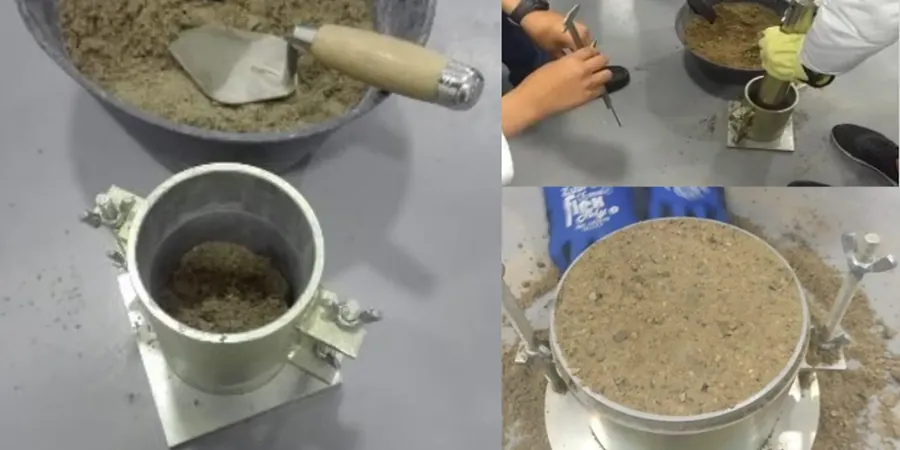
- Standard Proctor: 12,400 ft-lbf/ft³ compactive effort, 3-layer mold preparation
- Modified Proctor: 56,000 ft-lbf/ft³ compactive effort, 5-layer preparation
- Moisture correction applied for coarse fraction oversize per ASTM D4718
Local considerations
A fill placed west of the Arkansas River in the shale-derived clays of the Sand Springs area behaves differently from a sandy terrace fill near downtown Tulsa. The Proctor test captures those contrasts: a fat clay's optimum moisture might be 18% while a silty sand's is 11%. Contractors who compact at the wrong moisture content, or who rely on a Proctor curve from a different borrow source, risk low density, excessive settlement, or heave during wet seasons. The Oklahoma Department of Transportation specs tie acceptance directly to the Proctor reference, meaning a failed field density test can halt earthwork and trigger costly re-compaction. Running a site-specific Proctor on the actual material before mass grading begins is the simplest way to de-risk the compaction operation.
Explanatory video
Applicable standards
ASTM D698-12, ASTM D1557-12e1, AASHTO T-99, AASHTO T-180, ASTM D4718
Associated technical services
Standard Proctor Test
For residential slabs, landscape fills, and lightly loaded subgrades. Three-layer compaction in a 4-inch mold with the 5.5-lb hammer. Delivers maximum dry density and optimum moisture for 12,400 ft-lbf/ft³ effort.
Modified Proctor Test
For commercial building pads, highway embankments, and heavy pavement sections. Five-layer compaction with the 10-lb hammer at 56,000 ft-lbf/ft³. Matches the higher compaction energy modern rollers achieve on site.
Typical parameters
Frequently asked questions
What does a Proctor test cost for a Tulsa project?
A single-point or full Proctor curve typically runs between US$100 and US$200, depending on whether the lab is running Standard or Modified effort and whether companion Atterberg limits and sieve analysis are included in the same report.
How long does a Proctor test take in the lab?
A full moisture-density curve with classification data usually takes 3 to 5 business days. The drying portion of the test alone requires oven-drying each compaction point to constant mass, which sets the minimum turnaround. Expedited service is available when earthwork schedules are tight.
Can the same Proctor curve be used for different fill materials on one site?
No. Each distinct material, whether a brown lean clay from one borrow pit or a tan silty sand from another, needs its own Proctor curve. Using a curve developed for a different soil type is one of the most common causes of failed field density tests and rejected lifts during Tulsa earthwork inspection.